
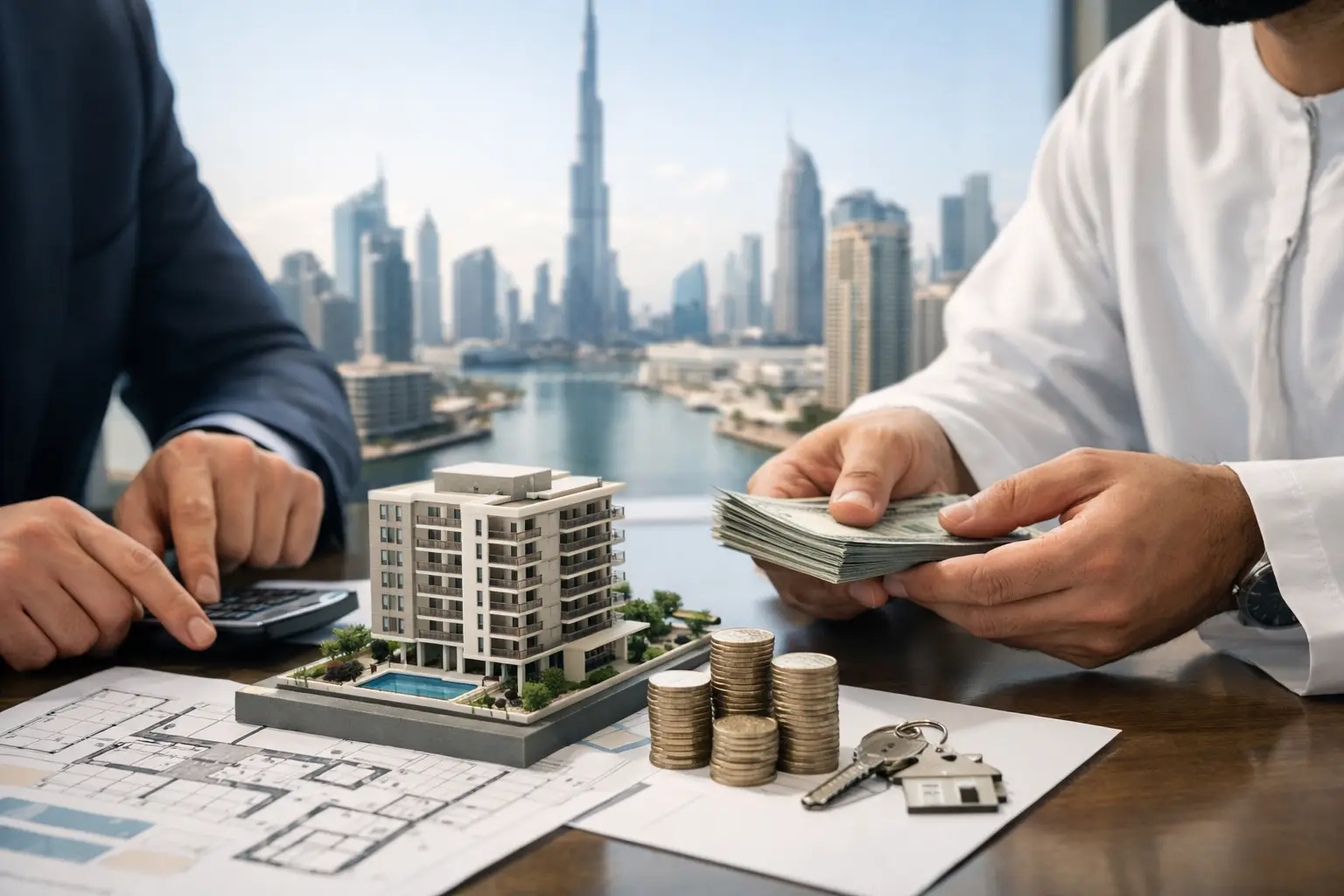
A buyer reserves a Dubai off-plan unit with 10% down, then pays in stages over three years while the building is still under construction. That simple outline explains the basics of how off plan payments work, but the investment outcome depends on the payment schedule, developer quality, escrow structure, and your exit plan.
For many investors, off-plan is attractive because it reduces upfront capital compared with a ready property. Instead of paying the full purchase price immediately and arranging a large mortgage from day one, you spread payments across construction milestones. In a market like Dubai, where selected districts have shown strong absorption and Price growth During expansion cycles, that can improve capital efficiency. It can also increase risk if the project timeline slips or if market pricing softens before handover.
How off plan payments work in practice
In the UAE, off-plan payments are usually tied to a sales and purchase agreement and a developer-approved payment plan. The buyer pays an initial booking amount, signs the contract, and then makes staged payments based on time intervals or construction milestones. Those funds are generally routed under the project’s regulated escrow framework, which is designed to protect buyers and restrict misuse of capital.
In Dubai, the Dubai Land Department and the Real Estate Regulatory Agency have shaped a clearer framework for off-plan transactions than many global markets. That matters for international investors comparing UAE real estate with less regulated emerging-market pre-construction models. Regulatory structure does not remove risk, but it does make the payment process more transparent.
A typical payment cycle often looks like this: a reservation fee at booking, a larger first installment on signing, several construction-linked payments, and then a final payment at handover. Some developers also offer post-handover plans, where a portion of the price is paid after completion over two to five years.
The main stages of an off-plan payment plan
1. Booking fee or expression of interest
This is the first payment made to secure the unit. In many Dubai launches, that figure ranges from 5% to 10% of the property value, although premium projects or highly anticipated launches may differ. The booking form is not the full contract, but it temporarily removes the unit from market inventory.
At this stage, investors should verify whether the amount is fully refundable, partially refundable, or non-refundable if they decide not to proceed. That detail varies by developer and launch terms.
2. Down payment on signing
Once the sales and purchase agreement is signed, the buyer usually pays the agreed initial tranche. In some cases, the booking fee forms part of the down payment. In others, an additional amount is due to reach the total first-stage percentage.
For example, on a 1.5 million AED apartment with a 20% initial requirement, a buyer may pay 10% to reserve and another 10% on signing. That means 300,000 AED is committed before major construction progress occurs.
3. Construction-linked installments
This is where most buyers spend the longest phase of the investment. Payments are commonly tied either to fixed dates or project completion milestones such as 20%, 40%, 60%, and 80% construction progress. The exact model depends on the developer.
Milestone-based plans are often more investor-friendly because they align payments with visible progress. Time-based plans can be less favorable if construction slows while payment obligations continue. Investors should read the schedule carefully rather than relying on headline marketing such as 60/40 or 70/30.
4. Handover payment
At project completion, the buyer pays the final pre-handover balance and takes possession. This payment can be substantial. In a 60/40 plan, 40% may be due at handover. That is manageable for some cash buyers, but it can become a pressure point if the investor planned to refinance or resell and market conditions changed.
This is also the stage where additional costs need to be budgeted, including Dubai Land Department fees, registration charges, service charge setup, and fit-out or furnishing costs if the unit is being prepared for leasing.
5. Post-handover payment plans
Some developers extend the plan beyond completion. A buyer might pay 50% during construction and 50% over three years after handover. These structures can help investors preserve liquidity and start generating rental income before the full price is paid.
That said, post-handover plans are not automatically better. The unit price may be higher than on a shorter plan, and some investors underestimate the strain of servicing installments while also covering service charges, furnishing, vacancy risk, or leasing costs.
Common off-plan payment structures in Dubai
Based on current market practice, several structures appear frequently across Dubai and Abu Dhabi launches:
- 50/50 - half paid during construction and half on handover
- 60/40 - sixty percent during construction, forty percent on handover
- 70/30 - front-loaded structure, common in stronger-demand projects
- 80/20 - more capital committed before completion
- Post-handover plans such as 50/50 over 3 years or 40/60 over 5 years
These numbers influence more than affordability. They shape your investment profile. A lower upfront plan may improve leverage and capital allocation across multiple units, while a front-loaded plan can reduce the outstanding balance at handover and sometimes improve resale confidence.
What investors should check before committing
Understanding how off plan payments work is only useful if you connect the payment schedule to project quality and market timing. A favorable plan from a weak developer is not attractive. A stricter plan in a high-demand district with a credible delivery record may be the stronger choice.
Start with the developer’s completion history. Look at whether previous projects were delivered on time, how well those assets performed in resale and leasing markets, and whether build quality held up after handover. Delivery track record is one of the clearest indicators of execution risk.
Next, assess the location. Infrastructure matters. Areas benefiting from transport upgrades, commercial expansion, school demand, or waterfront and master-community development often show better absorption. Based on recent UAE market patterns, investors have generally favored corridors where end-user demand and rental demand are both expanding, not purely speculative zones.
Then review the escrow and registration status. In Dubai, the project should be properly registered, and buyers should verify the legal framework around the development rather than relying only on launch material. This is especially important for overseas buyers who are not familiar with local procedure.
Off-plan vs ready property from a cash flow perspective
Off-plan and ready assets serve different investor goals. A ready property can produce Rental income Immediately, which appeals to yield-focused buyers. Gross rental yields In Dubai often vary by area and asset class, with stronger-performing communities historically offering competitive returns relative to London, Toronto, or many major European cities.
Off-plan, by contrast, is usually a capital appreciation strategy first and an income strategy second. You are accepting a period with no rent in exchange for a lower entry point, phased capital deployment, and potential price uplift by completion. That trade-off works best when the launch price is sensible relative to future supply and when the project is in a corridor with genuine demand growth.
If your priority is near-term cash flow, ready property may be more suitable. If your priority is medium-term appreciation with staged payments, off-plan may fit better.
The main risks in off-plan payment plans
The first risk is delivery delay. Even in regulated markets, completion dates can shift. That affects your return timeline and may create financing or opportunity-cost issues.
The second risk is market repricing. If broader supply rises or buyer demand cools before handover, the property may not command the premium you expected. This matters for investors who plan to flip before or at completion.
The third risk is overextending on payment commitments. Some buyers focus on the low booking amount and ignore the larger installments due later. A sound off-plan purchase should fit your liquidity profile under normal conditions and under slower resale conditions.
The fourth risk is assuming all developers are equal. They are not. Brand, execution history, community planning, and after-sales management can materially affect long-term value.
FAQs
Can foreigners buy off-plan property in Dubai?
Yes, foreign investors can buy off-plan property in designated freehold areas, subject to the project and current regulations.
Do you need a mortgage for off-plan payments?
Not always. Many buyers pay installments directly during construction and use a mortgage only at handover, if needed. Mortgage eligibility depends on lender terms, the project, and the buyer’s profile.
Are off-plan payments protected in Dubai?
They are regulated within a structured framework, including project registration and escrow requirements. Protection is stronger than in many pre-construction markets, but due diligence still matters.
Is post-handover always the best option?
No. It improves flexibility, but the unit price may be higher and the ongoing obligation can reduce net cash flow.
Is off-plan a good investment now?
It depends on launch pricing, developer quality, area demand, and your intended hold period. Based on current market data, select UAE corridors remain attractive where infrastructure growth, population inflows, and business expansion support long-term demand.
For serious investors, the payment plan is not just a convenience feature. It is part of the asset’s risk-return structure. Read it the same way you would read yield assumptions, supply data, or exit liquidity, because that is where disciplined property investing starts.
Frequently asked
Questions buyers ask about this topic
Learn how off plan payments work in Dubai, from booking fees to handover and post-handover plans, with investor risks, timelines, and key checks.
Keep reading

Investment
Investing In Dubai Real Estate: A Complete Guide For 2026
12 min read

Investment
Abu Dhabi VS Dubai Investment: Which Wins?
7 min read

Investment
First-Time Dubai Buyer Guide For Investors
7 min read

Investment
How To Verify Property Developer In The UAE
7 min read

Investment
Can Property Generate Passive Income?
7 min read

Investment
Studio VS One Bedroom Investment In Dubai
7 min read

Investment
Infrastructure Impact On Property Values
7 min read

Investment
International Investor Due Diligence Guide
8 min read

Investment
How Rental Yield Is Calculated Correctly
7 min read

Investment
Infrastructure Growth Areas Dubai Investors Track
7 min read

Investment
Dubai Transaction Costs Breakdown For Buyers
7 min read

Investment
UAE Real Estate Outlook 2027
7 min read

Investment
Guide To UAE Property Escrow
7 min read

Investment
How To Finance Dubai Property In 2026
7 min read

Investment
Dubai Property Legal Process For Buyers
7 min read

Investment
What Affects Property Appreciation In Dubai?
8 min read

Investment
Emaar Developer Track Record In Dubai
7 min read

Investment
Is Dubai Property Market Safe For Investors?
6 min read

Investment
Top Emerging Investment Zones UAE In 2026
7 min read

Investment
Property Investment In The UAE: What Matters
7 min read

Investment
Apartment Versus Villa Investment In UAE
7 min read

Investment
Dubai Off Plan Risks Guide For Investors
7 min read

Investment
What Fees Apply To Buyers In Dubai?
7 min read

Investment
How To Evaluate Off Plan Developers
7 min read

Investment
Dubai Luxury Market Trends In 2026
7 min read

Investment
Dubai Investor Due Diligence Guide
7 min read

Investment
Dubai Apartment Or Villa Investment?
7 min read

Investment
How To Assess Capital Appreciation
7 min read

Investment
High Yield Property Dubai: Where Returns Hold
7 min read

Investment
Top Branded Residences Dubai To Watch
7 min read

Investment
Can Foreigners Buy Property In Dubai?
7 min read

Investment
How To Calculate Rental Yield UAE
7 min read

Investment
Best Dubai Off Plan Launches For Investors
7 min read

Investment
Is Dubai Property Tax Free? The Real Answer
7 min read

Investment
How To Buy Property In Dubai Smartly
7 min read

Investment
Buy Property In Dubai For Residency
7 min read

Investment
Luxury Villas Dubai: Investment Outlook
7 min read

Investment
Dubai Property Investment Guide 2026
8 min read

Investment
Dubai Real Estate Trends 2026: What Matters
7 min read

Investment
Best Areas For Rental Yield In The UAE
7 min read

Investment
UAE Golden Visa Property Guide 2026
7 min read

Investment
Off Plan Versus Ready Property In Dubai
7 min read

Investment
Dubai Real Estate: What Investors Should Know
7 min read

Investment
UAE Property Taxes For Foreigners Explained
7 min read

Investment
Best Developers In Dubai For Investment
7 min read

Investment
Dubai Off Plan Payment Plans Explained
7 min read

Investment
7 Best Dubai Areas For Rental Income
7 min read

Investment
Abu Dhabi Property Investment Guide 2026
7 min read

Investment
Dubai Real Estate Investment Opportunities Now
7 min read

Investment
Future Projects In Dubai That Matter To Investors
7 min read

Investment
Future Of Dubai Real Estate Market In 2026
8 min read

Investment
How To Invest In Dubai Real Estate Smartly
7 min read

Investment
Rental Yields Dubai By Area In 2026
8 min read

Investment
Off Plan VS Ready Property Dubai: Which Wins?
7 min read
Investment
Golden Visa Property Requirements UAE
7 min read

Investment
Dubai Property ROI By Area: 2026 Outlook
7 min read

Investment
Best Areas To Invest In Dubai 2026
7 min read