

A year ago, many investors were still asking whether Dubai had already run too far, too fast. In 2026, the better question is narrower and more useful: which segments of the market can still produce durable returns? That is what makes Dubai real estate trends 2026 worth analyzing through yield, supply, infrastructure, and regulation - not headlines alone.
Dubai is no longer being priced only as a cyclical recovery market. It is increasingly being evaluated as a global capital destination with tax efficiency, residency upside, and stronger regulatory credibility than many competing markets. For investors comparing Dubai with London, Toronto, or major Us cities, the gap is not just tax treatment. It is also speed of infrastructure delivery, population growth, and the ability to enter a landlord-friendly market with relatively high gross yields.
Dubai real estate trends 2026 investors should watch
Based on current market data and the trajectory established over the last two years, 2026 looks less like a broad-based boom and more like a selective expansion cycle. Prime areas may continue to see price support, but the strongest investor opportunities are likely to come from neighborhoods where new infrastructure, employment clusters, and mid-market end-user demand align.
This distinction matters. When markets mature, not every district outperforms at the same rate. In Dubai, a waterfront branded residence and a well-located mid-market apartment can both work, but for different reasons. One may suit capital preservation and global buyer appeal. The other may offer stronger rental yield and easier leasing velocity.
Yield remains one of Dubai's core advantages
Dubai's appeal in 2026 still starts with income. Across many apartment-led communities, gross rental yields remain materially higher than those in major gateway cities in Europe and North America. Depending on unit type, location, service charges, and purchase basis, investors targeting yield may still see typical gross ranges around 5 percent to 8 percent in established and emerging districts, with some compact units performing above that range under the right leasing strategy.
That headline, however, needs context. Net return is what matters. Service charges, vacancy assumptions, furnishing costs, and financing terms can narrow the gap quickly. A high-yield unit in a weakly managed building is not automatically a better investment than a lower-yield asset in a district with stronger tenant retention and resale depth.
Off-plan demand is still strong, but buyer selection matters more
Off-plan has been one of the defining Dubai real estate trends 2026 investors cannot ignore. Flexible payment plans, Lower entry points relative to completed stock in some areas, and the potential for appreciation during construction continue to attract both regional and international buyers.
Still, off-plan is no longer a category to approach broadly. The developer, handover timeline, project density, and future competing supply in the same micro-market all matter. Investors should separate branded launches with genuine end-user demand from projects that depend too heavily on speculative resale momentum.
For buyers focused on capital appreciation, off-plan can still make sense where there is clear infrastructure support and constrained future inventory. For investors prioritizing immediate cash flow, ready property often remains the cleaner choice because income starts on day one and operational assumptions are easier to model.
The areas likely to outperform in 2026
The strongest-performing locations in 2026 are likely to share three characteristics: sustained tenant demand, infrastructure visibility, and a buyer base broad enough to support resale liquidity.
Established apartment markets such as Dubai Marina, Jumeirah Village Circle, Business Bay, and Downtown Dubai should continue attracting investor capital, but for different reasons. Marina and Downtown retain international recognition and short-term rental demand. Business Bay Benefits from its central location and proximity to employment nodes. Jvc continues to appeal to yield-focused investors because of relative affordability and deep end-user demand.
Emerging and infrastructure-backed corridors deserve equal attention. Dubai South remains one of the most important long-term stories because of its connection to logistics, aviation, and the wider growth linked to Al Maktoum International Airport. Expo City Dubai also supports this wider corridor effect, especially for investors willing to hold through medium-term infrastructure maturation rather than seek immediate peak pricing.
Villa-led communities may remain resilient where family demand is strong and supply is more controlled. Areas with schools, road access, and community retail often hold value better during periods when apartment supply rises sharply. That said, villas usually involve a higher ticket size and lower yield efficiency than smaller apartments, so the strategy depends on whether the investor wants appreciation, income, or owner-occupier resale appeal.
What is driving demand beyond speculation?
Dubai's market in 2026 is being supported by structural demand drivers, not just short-term sentiment. Population growth remains central. The emirate continues to attract entrepreneurs, senior professionals, family offices, and remote business operators who value tax efficiency and mobility. Residency pathways tied to property ownership, including Golden Visa eligibility At qualifying thresholds, also support buyer interest from expatriates and foreign nationals.
Government-led economic diversification adds another layer. Demand is not being built on one sector alone. Tourism, financial services, logistics, technology, and professional services all contribute to occupancy and housing demand. This is one reason Dubai compares favorably with markets that rely more heavily on a single cyclical employment base.
For international investors, legal clarity also matters. Dubai Land Department reforms, escrow protections in the off-plan market, and a more mature brokerage and mortgage environment have improved market confidence over time. That does not eliminate risk, but it reduces some of the opacity that once discouraged institutional and cross-border buyers.
Risks investors should price into 2026
A disciplined investor should treat 2026 as a favorable market, not a risk-free one. The first issue is supply. In areas with heavy launch activity, pricing can stay supported in the short term while resale competition builds quietly in the background. That becomes more visible at handover, when many investor-owned units hit the leasing and sales market at once.
The second risk is overpaying for branding. Branded residences and trophy inventory can command strong premiums, but the premium only works if the location, operator value, and end-buyer pool justify it. Some assets are excellent stores of wealth. Others simply have high entry pricing and lower yield efficiency.
A third issue is financing sensitivity. Even in a tax-efficient market, borrowing costs matter. Investors using leverage should stress-test returns under slower rent growth, delayed handovers, and higher-than-expected operating costs. A deal that looks attractive on brochure assumptions can weaken materially once net income is modeled realistically.
Off-plan vs ready property in 2026
For most investors, this is not a theoretical debate. It is a portfolio allocation decision.
Ready property is better suited to buyers who want immediate rental income, easier valuation benchmarking, and lower development risk. It is especially relevant in neighborhoods where tenant demand is already proven and inventory quality can be inspected directly.
Off-plan is more appropriate for investors willing to accept construction timelines in exchange for phased payments and appreciation potential before completion. The best opportunities are usually found where launch pricing is still reasonable relative to expected handover values, and where the area is benefiting from genuine infrastructure or employment growth.
If your objective is yield stability, ready assets often win. If your objective is medium-term upside with controlled cash flow commitments, selected off-plan can outperform. The right answer depends on your holding period, liquidity needs, and risk tolerance.
FAQs on Dubai real estate trends 2026
Is Dubai real estate a good investment in 2026?
Based on current data, Dubai remains attractive for investors seeking a mix of rental yield, tax efficiency, and medium-term capital growth. The opportunity is strongest in carefully selected submarkets rather than across the market as a whole.
Which areas in Dubai may offer the best ROI in 2026?
Yield-focused investors often look at Jvc, Arjan, and selected parts of Dubai South, while buyers prioritizing liquidity and global recognition may prefer Dubai Marina, Business Bay, and Downtown. The best ROI depends on whether you are optimizing for cash flow, resale depth, or long-term appreciation.
Is off-plan better than ready property in Dubai?
Neither is universally better. Off-plan may offer stronger appreciation if entry pricing and developer quality are right. Ready property usually offers more immediate and measurable income.
Can property in Dubai support Golden Visa eligibility?
In many cases, yes, provided the investment meets current UAE eligibility thresholds and structural requirements. Investors should verify the latest rules before purchase because policy details can change.
What is the biggest risk in Dubai property for 2026?
Overconcentration in oversupplied micro-markets is a leading risk. Investors should also watch service charges, handover timing, and whether projected rent levels are realistic for the asset type.
The strongest strategy for 2026 is not chasing the loudest launch or the most expensive address. It is buying where infrastructure, tenant demand, and entry price still make sense together. That is where Dubai continues to separate itself from many global markets - not by promising certainty, but by offering investors a rare combination of yield, growth potential, and policy support when the asset is selected with discipline.
Frequently asked
Questions buyers ask about this topic
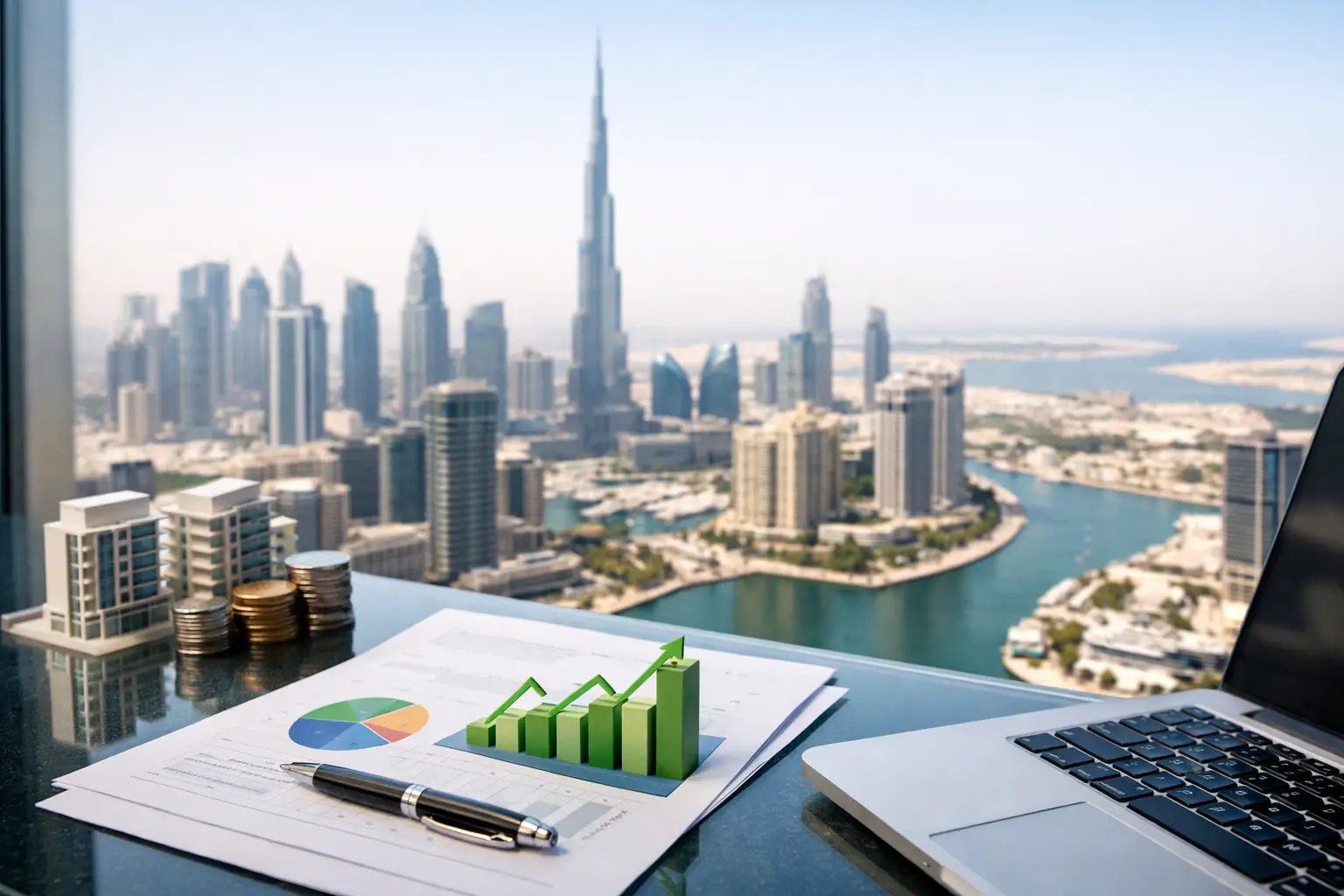
Dubai real estate trends 2026 point to stronger yields, selective price growth, and infrastructure-led demand across key investor corridors.
Keep reading

Investment
Investing In Dubai Real Estate: A Complete Guide For 2026
12 min read

Investment
Abu Dhabi VS Dubai Investment: Which Wins?
7 min read

Investment
First-Time Dubai Buyer Guide For Investors
7 min read

Investment
How To Verify Property Developer In The UAE
7 min read
Investment
Can Property Generate Passive Income?
7 min read

Investment
Studio VS One Bedroom Investment In Dubai
7 min read

Investment
Infrastructure Impact On Property Values
7 min read

Investment
International Investor Due Diligence Guide
8 min read

Investment
How Rental Yield Is Calculated Correctly
7 min read
Investment
Infrastructure Growth Areas Dubai Investors Track
7 min read
Investment
Dubai Transaction Costs Breakdown For Buyers
7 min read

Investment
UAE Real Estate Outlook 2027
7 min read

Investment
Guide To UAE Property Escrow
7 min read

Investment
How To Finance Dubai Property In 2026
7 min read

Investment
Dubai Property Legal Process For Buyers
7 min read
Investment
What Affects Property Appreciation In Dubai?
8 min read
Investment
Emaar Developer Track Record In Dubai
7 min read

Investment
Is Dubai Property Market Safe For Investors?
6 min read
Investment
Top Emerging Investment Zones UAE In 2026
7 min read

Investment
Property Investment In The UAE: What Matters
7 min read
Investment
Apartment Versus Villa Investment In UAE
7 min read
Investment
Dubai Off Plan Risks Guide For Investors
7 min read

Investment
What Fees Apply To Buyers In Dubai?
7 min read

Investment
How To Evaluate Off Plan Developers
7 min read

Investment
Dubai Luxury Market Trends In 2026
7 min read

Investment
Dubai Investor Due Diligence Guide
7 min read
Investment
How Off Plan Payments Work In Dubai
7 min read
Investment
Dubai Apartment Or Villa Investment?
7 min read

Investment
How To Assess Capital Appreciation
7 min read
Investment
High Yield Property Dubai: Where Returns Hold
7 min read
Investment
Top Branded Residences Dubai To Watch
7 min read

Investment
Can Foreigners Buy Property In Dubai?
7 min read
Investment
How To Calculate Rental Yield UAE
7 min read
Investment
Best Dubai Off Plan Launches For Investors
7 min read

Investment
Is Dubai Property Tax Free? The Real Answer
7 min read
Investment
How To Buy Property In Dubai Smartly
7 min read

Investment
Buy Property In Dubai For Residency
7 min read

Investment
Luxury Villas Dubai: Investment Outlook
7 min read
Investment
Dubai Property Investment Guide 2026
8 min read
Investment
Best Areas For Rental Yield In The UAE
7 min read

Investment
UAE Golden Visa Property Guide 2026
7 min read
Investment
Off Plan Versus Ready Property In Dubai
7 min read
Investment
Dubai Real Estate: What Investors Should Know
7 min read
Investment
UAE Property Taxes For Foreigners Explained
7 min read

Investment
Best Developers In Dubai For Investment
7 min read
Investment
Dubai Off Plan Payment Plans Explained
7 min read
Investment
7 Best Dubai Areas For Rental Income
7 min read

Investment
Abu Dhabi Property Investment Guide 2026
7 min read
Investment
Dubai Real Estate Investment Opportunities Now
7 min read

Investment
Future Projects In Dubai That Matter To Investors
7 min read
Investment
Future Of Dubai Real Estate Market In 2026
8 min read
Investment
How To Invest In Dubai Real Estate Smartly
7 min read
Investment
Rental Yields Dubai By Area In 2026
8 min read
Investment
Off Plan VS Ready Property Dubai: Which Wins?
7 min read
Investment
Golden Visa Property Requirements UAE
7 min read
Investment
Dubai Property ROI By Area: 2026 Outlook
7 min read

Investment
Best Areas To Invest In Dubai 2026
7 min read