
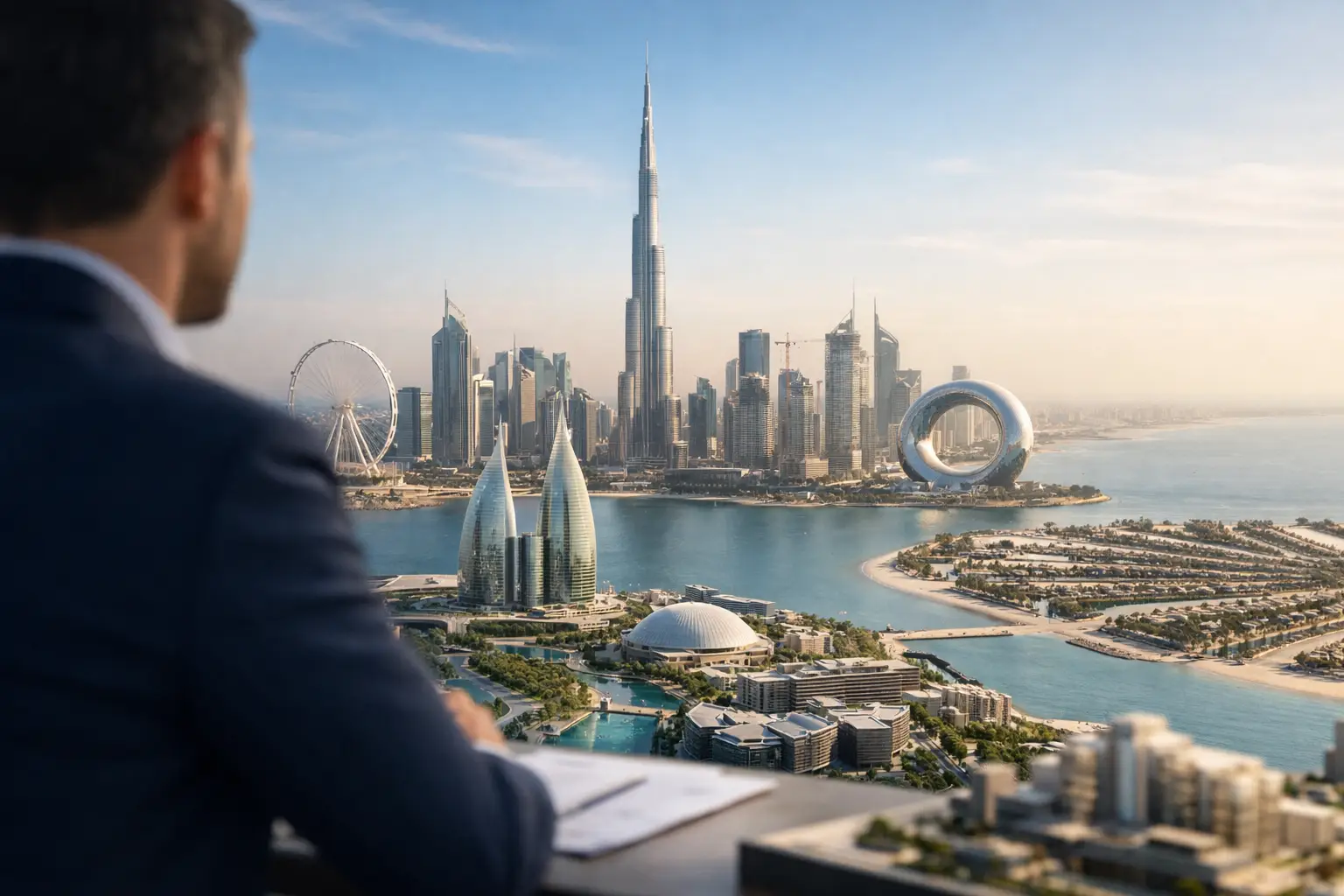
A metro extension, a new master-planned district, or a major airport upgrade can change a property market faster than most investors expect. In Dubai, future projects in Dubai are not just headline material - they often reset demand patterns, improve pricing power, and compress the window for early entry.
For investors, the real question is not whether Dubai will keep building. It is which projects are likely to create durable value, which locations could see speculative overheating, and how to position capital before infrastructure benefits are fully priced in.
Why future projects in Dubai matter for property returns
Dubai’s real estate market tends to reward investors who understand infrastructure timing. Historically, new transport links, business districts, waterfront developments, and lifestyle hubs have influenced both capital appreciation and rental demand. That does not mean every announced project becomes an investment-grade opportunity. The gap between a strong launch and a strong return can be wide.
Based on current market behavior, projects matter most when they do three things at once: improve connectivity, attract permanent end-users, and support commercial activity. A residential tower in isolation may lift local supply. A broader district with schools, offices, retail, transit, and public realm improvements is more likely to sustain values.
This is one reason Dubai continues to draw global capital compared with the UK, Canada, and parts of Europe. Investors are not only buying into a tax-efficient market. They are buying into an urban growth model where public infrastructure and private development often move in parallel.
The types of Dubai projects investors should watch
Not all development categories have the same impact on ROI. Investors targeting capital growth should pay close attention to transport-led expansion, mixed-use master communities, logistics and industrial corridors, and large tourism or waterfront schemes.
Transport projects tend to have the clearest pricing effect over time. Areas that become easier to reach usually widen their tenant pool and improve resale liquidity. This matters for both end-user neighborhoods and investor-heavy zones.
Master communities can also be significant, especially when they offer phased development rather than a one-off launch. In practice, these areas can create multiple entry points for investors, from early off-plan buying to later yield-focused acquisitions once the community matures.
Industrial and logistics projects deserve more attention than they usually get. As Dubai strengthens its role in trade, aviation, e-commerce, and regional headquarters activity, warehouse, light industrial, and nearby workforce housing segments may benefit alongside traditional residential markets.
Key growth corridors linked to future projects in Dubai
Dubai South and the Al Maktoum Airport ecosystem
Dubai South remains one of the most important long-term infrastructure stories in the emirate. Its investment logic is tied not only to residential expansion but also to aviation, logistics, and business activity around Al Maktoum International Airport. If capacity expansion continues as expected over the coming years, this corridor could support sustained demand from professionals, operators, and service businesses.
For investors, Dubai South is more of a medium- to long-term play than a short trading opportunity. Yields can be attractive in selected stock, but appreciation will depend on delivery pace, occupancy growth, and how quickly surrounding commercial ecosystems deepen. Investors with patience may find value here, particularly in projects with strong developer credibility and realistic handover schedules.
Expo City Dubai
Expo City has moved beyond the event-led narrative and is gradually positioning itself as a mixed-use innovation and business district. That matters because post-event sites often struggle unless they are repurposed with a clear economic role. Dubai’s approach has been more structured, with sustainability, office demand, education, and residential planning forming part of the wider strategy.
Property performance here will depend on actual business absorption, not branding alone. Still, if the district continues attracting companies, residents, and institutional activity, nearby housing could benefit from stronger demand fundamentals than many purely lifestyle-driven communities.
Dubai Creek and waterfront-led expansion
Waterfront projects have long held pricing power in Dubai, but investors should separate prime scarcity from mass-launch saturation. Dubai Creek-related development remains relevant because it combines lifestyle appeal with broader urban expansion. When waterfront districts are integrated with retail, hospitality, and transport upgrades, they tend to attract both users and investors.
The trade-off is pricing. Entry points in waterfront markets are often higher, which can compress rental yields in the early years. For investors targeting cash flow, the better opportunity may sit slightly outside the first-line premium zone, where tenant demand still benefits from the wider district story.
Jumeirah Village Circle, Arjan, and Dubailand spillover
Some of Dubai’s strongest investment outcomes do not come from trophy projects. They come from areas that absorb population growth as infrastructure expands. Jumeirah Village Circle, Arjan, and wider Dubailand-linked communities often benefit from road improvements, retail additions, school openings, and broader city outward movement.
These markets are especially relevant for yield-focused buyers. Historically, Dubai’s mid-market communities have often offered more practical rental performance than prestige locations. The risk, however, is supply density. Investors should monitor how many similar units are entering the market in each micro-location and whether tenant demand is diversifying or narrowing.
What current data suggests about investment potential
Recent Dubai market cycles have shown a familiar pattern: infrastructure-backed locations tend to outperform once livability improves and transaction volumes deepen. Data from DLD transaction activity, along with pricing trends tracked by major UAE property portals, generally shows that mature or maturing communities with strong access and end-user demand hold up better than purely speculative launches.
In many Dubai apartment markets, Gross rental yields Have often ranged around 5 percent to 8 percent depending on area, asset type, and acquisition timing. Some outer or mid-market communities can push higher, while prime locations may deliver lower yield but stronger long-term appreciation and lower vacancy risk. Future projects become most investable when they support one of these two outcomes clearly, rather than promising both without evidence.
For off-plan investors, payment structure and launch pricing are critical. A project attached to a major future district can still underperform if the launch price already assumes years of future growth. This is where disciplined underwriting matters more than brand excitement.
Risks investors should not ignore
Dubai remains one of the more transparent and regulated property markets in the region, but future-facing investment always carries execution risk. Announced infrastructure can face revised timelines. Large master plans can take longer to mature than marketing suggests. And in high-launch periods, localized oversupply can pressure rents even when the long-term area outlook remains positive.
There is also a difference between buying near a project and buying in the direct path of value creation. A property five to ten minutes from a new economic center may benefit. A property surrounded by competing inventory with weak differentiation may not.
International investors should also factor in currency exposure, holding period, service charges, and exit liquidity. Dubai’s tax efficiency is a major advantage versus many Western markets, but tax-free ownership does not eliminate bad entry pricing.
How to evaluate future projects in Dubai before investing
A practical screening framework helps separate conviction from noise. Investors should assess five variables before committing capital:
- Delivery credibility - Is the developer known for on-time execution and product quality?
- Infrastructure linkage - Does the project benefit from confirmed roads, transit, business zones, or public investment?
- Demand profile - Will the area attract end-users, tenants, businesses, or only speculative buyers?
- Supply competition - How many similar units will compete at handover and in the following 24 months?
- Exit logic - Who is the likely resale buyer, and what will motivate that purchase?
If a project scores well on all five, it may warrant serious attention. If it depends mainly on future hype and weak comparables, caution is justified.
FAQs
Are future projects in Dubai good for off-plan investors?
They can be, especially when launch prices are still reasonable relative to completed market comparables. The strongest opportunities usually sit in projects backed by credible developers and supported by real infrastructure, not just concept plans.
Which Dubai areas could benefit most from upcoming development?
Dubai South, Expo City, selected waterfront districts, and growth communities tied to transport and population expansion remain among the most closely watched. The right choice depends on whether your priority is yield, appreciation, or a Residency-linked purchase.
Do infrastructure projects always raise property prices?
No. Infrastructure improves an area’s fundamentals, but price performance also depends on supply, project quality, unit mix, and broader market conditions. Some areas see better occupancy before they see major appreciation.
Is Dubai still attractive compared with the Us, UK, or Europe?
For many investors, yes. Dubai offers Tax-free rental income, No annual property tax in the same way many Western markets impose, strong global connectivity, and a relatively efficient transaction environment. That said, it suits investors who are comfortable with a market driven by development cycles and timing discipline.
The best opportunities in Dubai rarely come from buying what looks most impressive on a brochure. They come from understanding where infrastructure, end-user demand, and pricing discipline intersect. That is the point where future growth starts to look less like speculation and more like strategy.
Frequently asked
Questions buyers ask about this topic
Future projects in Dubai are reshaping demand, prices, and yields. See which corridors, sectors, and timelines matter most to investors.
Keep reading

Investment
Investing In Dubai Real Estate: A Complete Guide For 2026
12 min read
Investment
Abu Dhabi VS Dubai Investment: Which Wins?
7 min read

Investment
First-Time Dubai Buyer Guide For Investors
7 min read

Investment
How To Verify Property Developer In The UAE
7 min read
Investment
Can Property Generate Passive Income?
7 min read
Investment
Studio VS One Bedroom Investment In Dubai
7 min read

Investment
Infrastructure Impact On Property Values
7 min read

Investment
International Investor Due Diligence Guide
8 min read

Investment
How Rental Yield Is Calculated Correctly
7 min read
Investment
Infrastructure Growth Areas Dubai Investors Track
7 min read
Investment
Dubai Transaction Costs Breakdown For Buyers
7 min read
Investment
UAE Real Estate Outlook 2027
7 min read

Investment
Guide To UAE Property Escrow
7 min read
Investment
How To Finance Dubai Property In 2026
7 min read
Investment
Dubai Property Legal Process For Buyers
7 min read
Investment
What Affects Property Appreciation In Dubai?
8 min read
Investment
Emaar Developer Track Record In Dubai
7 min read
Investment
Is Dubai Property Market Safe For Investors?
6 min read
Investment
Top Emerging Investment Zones UAE In 2026
7 min read
Investment
Property Investment In The UAE: What Matters
7 min read
Investment
Apartment Versus Villa Investment In UAE
7 min read
Investment
Dubai Off Plan Risks Guide For Investors
7 min read
Investment
What Fees Apply To Buyers In Dubai?
7 min read

Investment
How To Evaluate Off Plan Developers
7 min read
Investment
Dubai Luxury Market Trends In 2026
7 min read

Investment
Dubai Investor Due Diligence Guide
7 min read
Investment
How Off Plan Payments Work In Dubai
7 min read
Investment
Dubai Apartment Or Villa Investment?
7 min read

Investment
How To Assess Capital Appreciation
7 min read
Investment
High Yield Property Dubai: Where Returns Hold
7 min read
Investment
Top Branded Residences Dubai To Watch
7 min read
Investment
Can Foreigners Buy Property In Dubai?
7 min read
Investment
How To Calculate Rental Yield UAE
7 min read
Investment
Best Dubai Off Plan Launches For Investors
7 min read
Investment
Is Dubai Property Tax Free? The Real Answer
7 min read
Investment
How To Buy Property In Dubai Smartly
7 min read
Investment
Buy Property In Dubai For Residency
7 min read
Investment
Luxury Villas Dubai: Investment Outlook
7 min read
Investment
Dubai Property Investment Guide 2026
8 min read
Investment
Dubai Real Estate Trends 2026: What Matters
7 min read
Investment
Best Areas For Rental Yield In The UAE
7 min read
Investment
UAE Golden Visa Property Guide 2026
7 min read
Investment
Off Plan Versus Ready Property In Dubai
7 min read
Investment
Dubai Real Estate: What Investors Should Know
7 min read
Investment
UAE Property Taxes For Foreigners Explained
7 min read
Investment
Best Developers In Dubai For Investment
7 min read
Investment
Dubai Off Plan Payment Plans Explained
7 min read
Investment
7 Best Dubai Areas For Rental Income
7 min read
Investment
Abu Dhabi Property Investment Guide 2026
7 min read
Investment
Dubai Real Estate Investment Opportunities Now
7 min read
Investment
Future Of Dubai Real Estate Market In 2026
8 min read
Investment
How To Invest In Dubai Real Estate Smartly
7 min read
Investment
Rental Yields Dubai By Area In 2026
8 min read
Investment
Off Plan VS Ready Property Dubai: Which Wins?
7 min read
Investment
Golden Visa Property Requirements UAE
7 min read
Investment
Dubai Property ROI By Area: 2026 Outlook
7 min read
Investment
Best Areas To Invest In Dubai 2026
7 min read